 |
 |
 |
|---|
|
|
|
|---|
1. A strong memory and mental maturity are prerequisites for memorization.
2. You must be at least seven years old.
3- Tajweed must be used when reciting the Qur'an (Intonation).
4- In addition, mental evaluations, character, and attractiveness are scrutinised
Islam is built on the principles of the Holy Qur'an. Additionally, Muslims have a natural need for the instruction, intonation, and illumination of the Quran. Therefore, the Quranic and religious schools have received a great deal of attention from the beginning. A department of memorising and intonation has also been established at Darul Uloom Jamia in Sukkur with this relevance in mind. The teaching of the Quran via memorization and intention is carried out by professionals QAARI (Expert in intonation) and HAFIZ (Expert in Recitation and Memorization). Additionally, (Physical) training receives specific focus in addition to high-quality education.
The following schools, which are connected to the Center, work to promote the Qur'an:
1. Madrasa Darul Quran, Sukkur Township, Sukkur: Classes are held there for adults who want to learn the Quran using the Nazra (visual) and Tahafiz (memorization) methods.
2. Madrasa Al-Huda, Memon Masjid: Classes are held there for adults who want to learn the Quran in Sukkur, Nazra (visual), and Tahafiz (memorization) formats.
3. Maktab Qurania, Muhammad Masjid, Workshop Road, Sukkur: Classes are being held there for adults who want to learn the Quran in Nazra (visual) and Tahafiz (memorization) formats.
4- Center for Quranic Education Al-Aqsa Mosque, Sukkur: Al-Aqsa Mosque is a branch of Jamia Darul Uloom Sukkur, which was founded a while ago. It is located close to Barrage Colony. Classes in Nazra (visual) are being held there.
5. Maktab Jamia Masjid Mehrab, Sukkur Town, Sukkur. Classes are being held in Maktab Jamia Masjid Mehrab Sukkur, Nazra (visual), as part of the adult session of Quran learning.
1. Along with good memory, mental maturity is necessary.
2. Must be 14 years of age and at least middle pass for (Dars-eNizami)
3. In order to enter any level, it is necessary to recite the Holy Quran.
4. For admission at the required level, it is necessary to pass with standard marks in the previous level.
5. Also the entrance test will be taken from different books ( Related to the course) of the previous level.
6. Along with this, mental tests, character, and manner are also judged.
Teaching System department is one of the best departments of Dar Ul Uloom, Sukkur, where student after completing his courses is certified -as Scholar- by Tieing Turban. While in this institute Arabic language, with other fine arts and studies, is taught. Because the Arabic language is preferred to comprehend the very essence of the Quran and Sunnah and their connotations. And without good Arabic, it is impossible to comprehend the message of the Quran and Sunnah. Accordingly, it has been made compulsory for students to have mastery of the Arabic language, so they may discern Arabic literature.
From the very beginning, various kinds of fine arts are being taught without any change. However, there are made some changes according to situations or prescribed objectives. In Jamia Dar ul Uloom, Sukkur the course of Teaching System is comprised of 9 years. Which has the following stages:
1. Secondary Stage: (Equal to Matric)
=> This stage period is three years, the first two years Arabic words and their grammar (Saraf and Nahw) is taught. While great care is laid upon the drill and practice. In these three years the following article and arts are
taught.
1. Practice of Qirat
2. Tafseer
3. Hadith Sharif
4. Fiqah
5. Saraf e Nahw
6. Arabic literature
7. Mantiq
8. Seerat
2. Spacial Secondary stage(Equal to Inter)
=> This step consists of two years. In which the following articles and arts are taught.
1. Tafseer E Quran
2. Hadith Shareef
3. Fiqah
4. Usooles of Fiqah
5. Nahw
6. Arabic literature
7. Mantiq
8. InSha e Arabi
3. Tertiary stage (Equal to B.A)
=> This step consists of two years. In which the following articles and arts are taught.
1. Tafseer E Quran
2. Hadith Shareef
3. Usooles of Hadith
4. Fiqah
5. Usooles of Fiqah
6. Faraiz
7. Arabic literature
8. Ilm E Kalam
9. Ilm E Balgat
10.Philosophy
11. History
12. InSha e Arabi
4. Quartiary step ( Equal to M.A)
=> This step consists of two years. In which following articles: Tafseer e Quran, Astronomy, Hadith and Rules of Hadith, geography, Modern economics, and Rejection to Qaidaniyat and arts are taught.
The second year of this stage is called
Hadith Sharif's year, in which the
following books are taught.
1. Saheeh Ul Bukhari
2. Saheeh Ul Muslim
3. Jamiu Tirmizi
4. Sunan Abi Dawood
5. Sunan Nasae
6. Sunan ibn E Majah
7. Muatta Imam Malik
8. Muatta Imam Muhammad
9. Sharah Maani l Aasar.
Currently, the course of Teaching System (Dar e Nozami), which is taught in Dar ul Uloom, Sukkur, is developed by Federal Madaris Arabia, Pakistan. Therefore, students of Dar ul Uloom, Sukkur have to pass six years' examination. In which the first examination is given in the third year of teaching, which is called the tertiary stage. Whose mark sheet is accepted as Matric Marksheet. And the second examination is held in the fifth year of the course, which is known as the tertiary stage. Whose mark sheet is accepted as inter Marksheet. While the third examination is held in the sixth year which is better known as the quartiary stage. Whose mark sheet is accepted as B.A Marksheet. The fifth examination
is given in the eighth year (which is
called scholarly 1st year), while sixth
and the last examination is given in the
ninth year (which is called the second year). شہادت العالمیہ فی العلوم العربیہ والاسلامیہ’’ is a degree name which is awarded at the end of the course. Which is also recognized from HEC, Islamabad, equal to M.A Arabic or M.A Islamiyat. During the nine years' course of Dar e Nizami, except Federal Al Madaris Al Arabia's examinations, annual examinations are held by Jamia, meanwhile, mid-term examinations are also conducted and an examination of primary to special secondary class is also conducted. Those students who remain successful throughout their examinations are promoted to the next levels.
1. Along with the good memory, mental maturity is necessary.
2. Must be 14 years of age and at least middle pass for (Dars-e-Nizami)
3. In order to enter any level, it is necessary to recite the Holy Quran.
4. For admission in the required level, it is necessary to pass with standard marks in the previous level.
5. Also entrance test will be taken from different books (Related to course) of previous level.
6. Along with this, mental test, character and manner are also judged.
Normally, the students, who read "Dars-e-Nizami", are not good at Arabic speaking and writing. Although they devote their 8 to 9 years to Dars-e-Nizami despite that they fail to well acquaint the Arabic language fully. Therefore, it is a prerequisite condition to be well acquainted with the Arabic language, to form an Arabic Learning atmosphere is essential. Keeping that strategy in view, some of the Religious Schools have diverted their grave attention to that problem. Meanwhile, the Dars-e- Nizami Course is taught in the Arabic language, which is also called “معہد’’. Furthermore, the Department of معہد, before to years, has been established in the Darul Uloom, Sukkur. Darul Uloom, Sukkur in the current phase is providing services to secondary people. Apart from this, a period of Arabic teaching to those who read Dars-e Nizami in Sindhi is also under consideration of wits.
1. Along with good memory, mental maturity is necessary.
2. Must be 14 years of age and at least middle pass for (Dars-eNizami)
3. In order to enter any level, it is necessary to recite the Holy Quran.
4. For admission at the required level, it is necessary to pass with standard marks in the previous level.
5. Also the entrance test will be taken from different books ( Related to the course) of the previous level.
6. Along with this, mental tests, character, and manner are also judged.
It is true a civilized society is the consequence of educated women. In the lap of a chasten mother, is the best institute in the world, where juveniles learn the lessons of human glory through the lullabies. Therefore, the education of women is not the education of an individual member but the education for a civilized community. Therefore, from the beginning, an institute of girls' education (Taleem e Niswan) is the part of Jamia Dar Ul Uloom, Sukkur. Where girls and women (Girls and Women for Allma Course) are taught according to the curriculum: Translation and Explanation of the Quran, Hadith, Fiqa, rules of Hadith, Rules of Fiqa, Meras, Balaghta, Sirf e Nahoo, Memorization, and other courses i.e. sewing and cooking, of the Federal Madaris Al Arabia, Pakistan. While in the vacations of Schools and colleges, a short ameliorative religious course i.e. "Fatami" is taught to girls and women.
Where, with the Nobel examples of "Wives of Prophet Muhammadﷺ", a comprehensive informative and ameliorative session is held for girls and women.
Meanwhile, under the supervision of the Jamia Dar ul Uloom, Sukkur, three girls' institutions are offering their vital services. These are:
1- Jamia Fatma tz Zahar Albnat Near Jama Masjid Usmania, Barrage Colony, Sukkur. Named after Jamia Fatma tz Zahar Albnat is a main campus of the girls, which under the Jamia Dar ul Uloom, Sukkur.
Campus 1: offering services in Jamia Masjid Usmania, Barrage Colony, Sukkur.
Jamia Fatma tz Zahar Albnat is offering Dars e Nizami (from starting to Hadith), sector of memorization, Tajweed, Naziran, Sewing and cooking to aged and untrained girls. Timing from 08 am to 2 pm.
2- Almarkazai Al Islami Madina Al-Binayat, opposite to city point gate Ada. shah colony, Sukkur.
Almarkazai Al Islami Madina offers evening shift (Zahr to Magrib Pyar) of Dars e Nizami, Darja Aliya to Shoba e Tahfeez o Tajweed and Nazira.
Masdras tal Huda Al-baniyat, Near Memon Majisd Barrage colony Road, Sukkur. Masdras tal Huda Al-baniyat offers evening shift ( Zuhar to Magrib prayer) of Dars e Nizami, Darja Aliya, and Shoba i Tahfeez o Tajweed and Nazra classes.
Furthermore, many people from many walks of life benefit from the Adults' Education programme, including students, traders, and government officials. The Adults' session takes place from Magrib to Isha prayer.
As Muslims, we must have a strong understanding of Deen and a recognisable approach to the Quran because it is our insatiable spiritual desire. Dar Ul Uloom, Sukkur, has established a short course for those who are employed. Aspirants can acquire fundamental Arabic grammar, the Quran's translation and explanation, Hadith with Religious Studies, and basic societal facts from a religious perspective. ..
In Jamia Dar Ul Uloom, Sukkur, Medicine is taught in the only seventh (sabia) year, therefore, it is necessary to have a qualification of Sixth Sadsa pass is required.
It is evident in the records of history that Islamic knowledge has remained convoluted with the knowledge of medicines (Scientific Knowledge). As Hazrat Imam Shafai R.A says, "Knowledge is of two types: Knowledge of religion and Knowledge of (Human) body". And the knowledge of theology is necessary for Sharia-based life. While the knowledge of the body is important for its health and cure of ailments. Our scholars, along with the knowledge of the Quran, Quranic interpretation, and Hadith, were experts in the field of medicines. So it can be inferred from the fact, that the knowledge of medicine was the asset of our scholars too. But in the contemporary period, people are relying on an allopathic way of treatment. And that is the reason that our scholars have abandoned their legacy. However, keeping the above fact in view, Jamia Dar Ul Uloom, Sukkur with the interests of Moulana Mufti Nazir Ahmed, and the famous Hakim Tariq Mahmood Chugtai, has set an institute for Medicines since 2017. Students, under this section, are being taught Knowledge of medicine along with Mualijat, Muferdat, and Tashreah ul Badan with practical training. While these three books: Shariah Asbab, Taj ul Aqaqeer, and Tareeh ul Badan are being taught as the curriculum of medicine. So far 56 students have been passed out from this institute.
And the lodging in Dar-ul-Uloom, Sukkur is related to the acquisition of knowledge along with the amelioration. Therefore, for the students who are lodging in Dar-ul-Uloom, Sukkur, it is mandatory to follow the instructions seriously:
1. Turn out 30 minutes before morning Azan, and to offer Tahjud Prayer.
2. After morning prayer, a devotion of (special prayers) and recitation of the Holy Quran.
3. Offering Nawafil prayers.
4. Recitation of Surah Yasin after Magrib prayer.
5. A session of "Aleekum Bastani, social ethics, and lives of Muslims, after Prayer of Asar.
6. Special gathering for Nawafil and evening prayers, after Magrib prayer.
7. A group (Zikr) session, After Isha prayer.
8.Recitation of Surah Mulk, before bedtime.
9. Arrangements for Sunnah and leniency in manners of the practical life of 24 hours.
10. Arrangements for Salam and Altazam.
11. On Friday, Presence in Durood Session (From Asr to Magrib).
12. Try to stimulate to observe monthly fasts in the (Iyaam-e- Baiz) days.
"Training" is a major purpose of the purposes of founding Dar-ul- Uloom Sukkur. Therefore, "Knowledge with Action" is written as the watchword in the introduction of Dar-ul-Uloom, Sukkur. Thus, Keeping its objectives in view, Dar-ul-Uloom, Sukkur has developed a comprehensive curriculum, "how to lead a practical life", in accordance with Quran and Sunnah (Hadith), which is obligatory to every student to follow. And the points of the curriculum are given below:
1. Turn out 30 minutes before morning Azan, and to offer Tahjud Prayer.
2. After morning prayer, a devotion of (special prayers) and recitation of the Holy Quran.
3. Offering Nawafil prayers.
4. Recitation of Surah Yasin after Magrib prayer.
5. A session of "Aleekum Bastani, social ethics, and lives of Muslims, after Prayer of Asar.
6. Special gathering for Nawafil and evening prayers, after Magrib prayer.
7. A group (Zikr) session, After Isha prayer.
8.Recitation of Surah Mulk, before bedtime.
9. Arrangements for Sunnah and leniency in manners of the practical life of 24 hours.
10. Arrangements for Salam and Altazam.
11. On Friday, Presence in Durood Session (From Asr to Magrib).
12. Try to stimulate to observe monthly fasts in the (Iyaam-e- Baiz) days.
Under these points, students of Dar-ul-Uloom, Sukkur, in their free hours, perform various other duties: Preaching through harmony and wisdom, educating with considerable arguments, and deliver Jumma (Friday) sermons, in which they speak beyond sectarian perspective, in different religious institutes. Furthermore, keeping the current challenges of writing and speaking in view, students attend a weekly program named: "Bazam e Ottoman" through which students are trained for writing and speaking competitions. While in the drafting section, an institute "Ottoman Ilam-o-Qalam Dosti" directs students for drafting skills and gets to write on different topics, which are also published in the three-monthly magazine "Sa Maahi Ilum" after the examination.
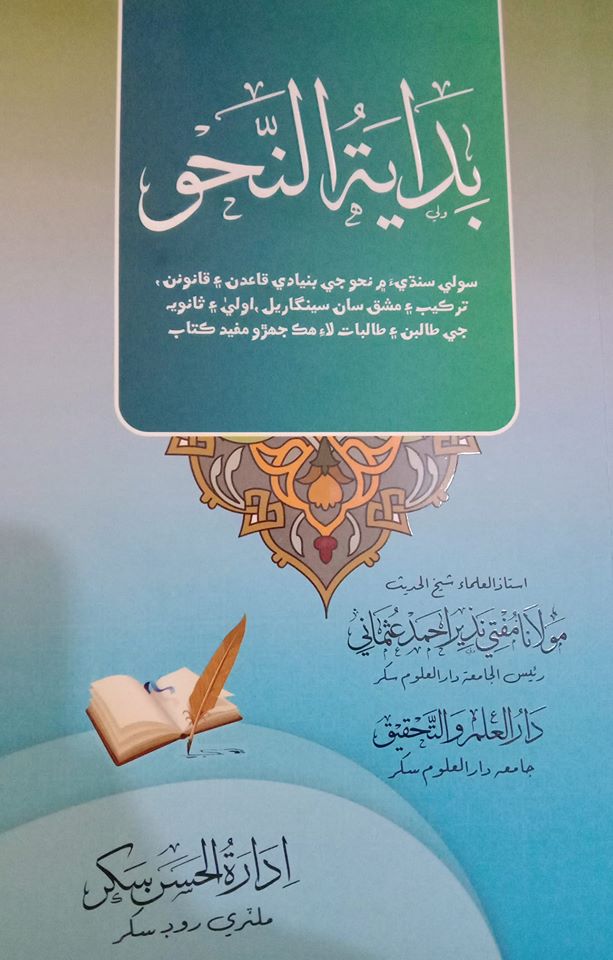
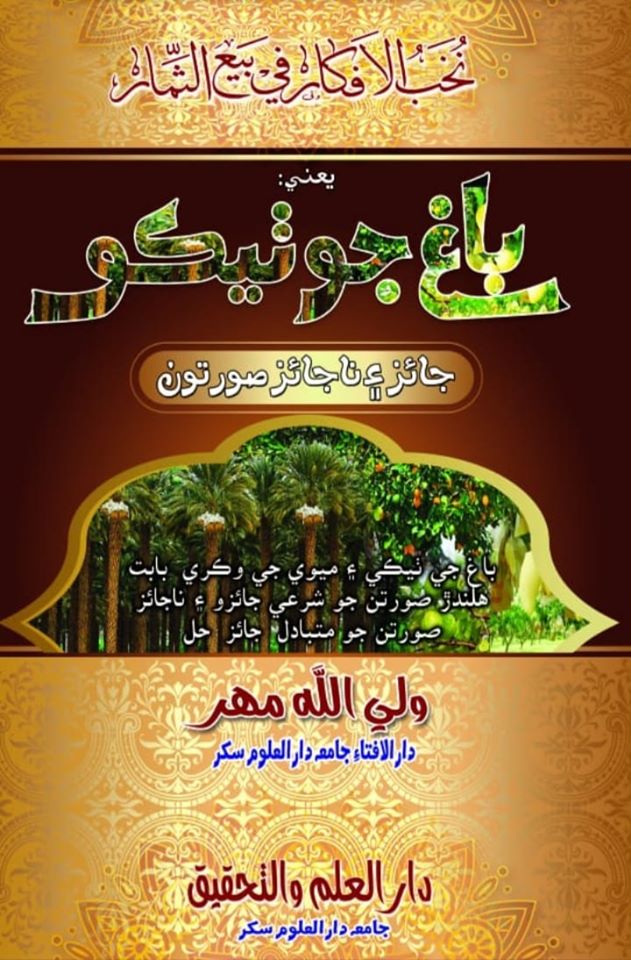
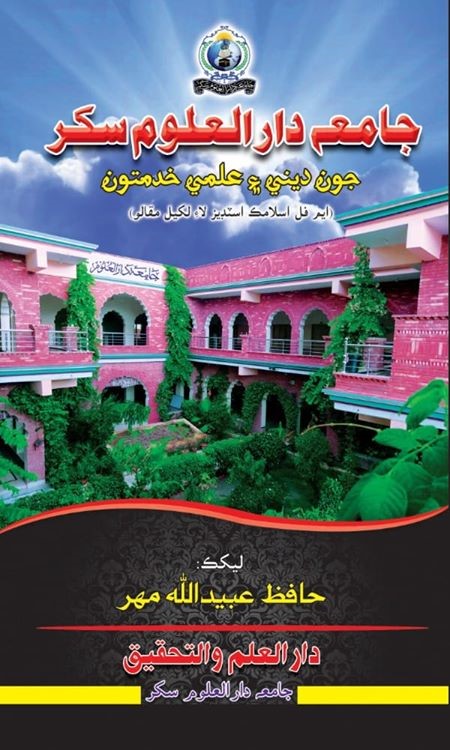
Under the supervision of Dar-ul- Uloom, Sukkur, a department i.e. "Dar ul Ilm-o-Tehqiq"(Door of Knowledge and Research) has been established. And the following books of the scholars, who are affiliated to Dar-ul- Uloom, Sukkur, have been published by other institutions.
1. Tuhfat ul Talabeen.
2. Bidayat Ul Nahw
3. Ortoon k lae Tuhfa (Gift for women)
4. Tahsil ul Wusool Ila Elm Il usool
5. Nabvi Baag ki Khshboo.
Meanwhile, A department of Dar-ul- Uloom, Sukkur: "Dar ul Ilm-o-Tehqiq" for some time is engaged in collecting the Arabic knowledge and experience from Sindhi scholars in order to republish that rare knowledge, according to contemporary objectives, in its journals. Therefore, in that procession, below mentioned books have been published by Dar-ul- Uloom, Sukkur's department "Dar ul Ilm-o-Tehqiq" while some other projects of books are in the printing phase.
1. Jamia Dar-ul- Uloom, Sukkur Tarjmaan Risala " Seh Mahi Al Ilm Sukkur" Special Edition in Sindh with Fiqa and Fatwa number.
2. Bagbat ka theeka, Guidance through Shariah in legal and illegal matters of fruit forms i.e., Mango, Banana, Dates.
3. Raees Ul Jamia Hazrat Mufti Nazeer Ahmed Usmani Sahb's book written on Arabic grammar " Bidayat ul Nahw in Sindhi".
4. Bidayt Ul Nahw Urdu
5. Usool e Meeras.
Masajid:
1. Jamia Masjid Usmania Bairage Colony, Sukkur.
2. Markazi Jamia Masjid Riyaz ul Jannaht, Government Society Airport Road, Sukkur.
3. Jamia Masjid Farhad Aqab, Sukkur, IBA university, Sukkur.
4. Jamia Masjid Kheef Aachar street Masjid, Bhutha chowk, Sukkur.
5. Jamia Memon Masjid, Memon Muhallah, Sukkur.
6. Jamia Masjid Sector one, Sukkur Town.
7. Jamia Masjid Siddique Akbar Military Road, Sukkur.
8. Muhammad Masjid Workshop Road Sukkur.
9. Aqsa Masjid Nazad Allied School, Sukkur.
10. Jamia Masjid Mehrab, Sector 5 Town Sukkur.
11. Jamia Masjid Zinnoorain, Marvi Society, Airport Road, Sukkur.
It is conspicuous in Islamic history that Masjid has played an unprecedented role in Muslim community. Masjid, where the work of teaching and training in the concern of creation from creator is done, had a status to settle the social disputes. But unfortunately, in contemporary period, the status of Masjid has been limited and the congregation of the mosque become an old story.
The Department of Dar-ul- Uloom Sukkur -Department Rabitta Al-Masajid- is a movement of resurrection for the status of Masjid. Whereas, Ither Masjids with the affiliation of Rabitta Al-Masajid along with Namaz have launched other courses: Teaching of Quran, Distance Teaching of Quran to those who are engaged in their different jobs, the short-term adult courses, instructions for Namaz and lectures sessions.